Daily Stylish: A Script Font for Elegant Design
There’s a moment in the design process when everything clicks. It happens while choosing a cover font for an ebook, or when reworking a blog header to match a new brand identity. That moment is where Daily Stylish finds its place—a script font that feels both modern and timeless, with a rhythm that speaks to editorial design and content readability.
The Character of Daily Stylish
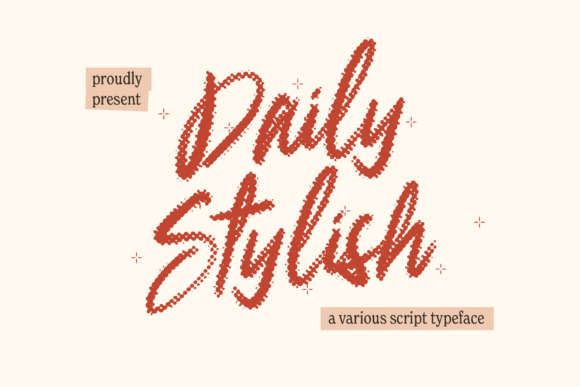
Daily Stylish is more than just a font; it’s a typeface with a personality. Its fluid strokes and natural handwritten feel give it a sense of movement, as if each letter was written by hand with care. The font carries a subtle elegance that doesn’t overpower, making it ideal for projects where visual balance matters. It has a softness that invites the eye, yet remains legible even at smaller sizes.
Its character is versatile enough to work in both digital and print formats. Whether used for a lifestyle blog header or a printable planner, Daily Stylish adds a touch of refinement without sacrificing clarity. It’s the kind of font that can elevate a design without drawing too much attention to itself—perfect for content that needs to be both beautiful and functional.
Real-World Applications
Imagine redesigning a recipe ebook. The title needs to catch attention but still feel approachable. Daily Stylish fits beautifully here, offering a stylish yet readable option for chapter openers and pull quotes. It pairs well with a clean serif font for body text, creating a hierarchy that guides the reader through the content.
For a wedding guide, the font’s flowing lines and organic shape bring a sense of warmth and intimacy. It works well in headings, invitations, and decorative elements without overwhelming the design. In a coaching workbook, it adds a personal touch to section titles, helping to create a cohesive and professional look.
In a newsletter graphic, Daily Stylish can be used for a featured quote or a bold headline. Its expressive nature makes it ideal for short, impactful text, while its structure ensures it doesn’t lose legibility when scaled down for mobile screens or PDF exports.
Readability and Practical Use
While Daily Stylish excels in display roles, it’s important to consider its suitability for longer reading. As a script handwritten font, it’s best reserved for titles, subtitles, and decorative accents rather than body copy. Its expressive style can become difficult to read in dense paragraphs or small captions, especially on screens.
When using Daily Stylish in print materials, ensure there’s enough contrast between the font and the background. For web use, test it on different screen sizes to confirm it maintains clarity. It’s also wise to check the font’s multilingual support if the content includes other languages, and verify the file formats available for your project.
For editorial layouts, pairing Daily Stylish with a complementary font enhances its effectiveness. A serif font like Georgia or Garamond can serve as a reliable body text companion, while a sans serif like Open Sans offers a clean contrast for navigation or captions. This combination helps maintain visual balance and readability across different sections of a publication.
Design Considerations
Before integrating Daily Stylish into a project, review the included styles, alternates, and ligatures. These features can add depth and variety to the design, allowing for more creative expression without compromising consistency. Check the commercial licensing terms if the font will be used in ebooks, templates, or client projects to avoid any legal issues.
For content creators, the font’s versatility makes it a valuable addition to a design toolkit. Whether crafting a printable planner, a course PDF, or a digital magazine layout, Daily Stylish brings a premium feel that aligns with high-quality editorial standards. Its presence in a design signals thoughtfulness and attention to detail.
As with any typeface, the success of Daily Stylish depends on how it’s used. When applied with intention and care, it becomes more than just a font—it becomes part of the story being told. From a lifestyle blog to a wedding guide, it supports the mood and message of the content, reinforcing the brand identity in a subtle yet powerful way.